The Top 6 Reasons This Infographic Is Just Wrong Enough to Sound Convincing

A little back story:
Zach “Zach Weinersmith” Weiner was looking for someone to help make his idea for this infographic a reality, and I was lucky enough to fit the bill thanks to some work I’d done with College Humor and, yknow, charts. So to be clear, Zach wrote this start to finish, and I did the design work to make it look awesome and real and stuff.
It went up on SMBC Comics earlier this week, and since has showed up on Slate! Oh, and Ezra “BAMF” Klein tweeted:
6 reasons this infographic is wrong, in one infographic: http://t.co/DGwyHiO6HE
— Ezra Klein (@ezraklein) November 7, 2013
Of course if you’d like to buy this chart as a poster, you should click here and make your dreams a reality.
So if you make webcomics and want to make a chart together, apparently you should talk to me.
See More Posts About:
- Image Link Code:
- A link to this post:
- Tweet
- StumbleUpon

How to Win At Rock Paper Scissors Every Time

- A link to this post:
- Tweet
- StumbleUpon
The System 423: Types of Typos

Greetings, People of the Internet
Since you like the comic and/or charts and/or typos, some things to keep in mind:
- I sell prints! For $10 + shipping you can have your very own poster of this or any comic on the site.
- I sell shirts! They are in the same vein as this comic. You will like them. Click here to check out Venn F%*king Diagrams or Beards Turn Laziness into Awesomeness.
- Share the comic on whatever sites you share things on. It helps.
- Subscribe to the feed. You’ll get comics Monday, Wednesday, and Friday each week. For free.
I’ll be at New York Comic Con in Artist Alley This Weekend

Remember, me! Shirts! Prints! Pins! Stickers! High-fives! Hawk! NYCC Artist Alley! SEE YOU THIS WEEKEND!
Our table is Artist Alley P-10, listed under “Ross Nover” or “Rosscott”. If you come by the table and say the magic word (“kerning”) you get a free sticker or pin while supplies last. Free things, just for coming by the table and remembering a word! Can’t beat that with a stick. Unless you have a stick. In which case I guess you could.
Some notes on the comic:
So I did actually find a list of common types of typos. I have no idea how official this list is, but it looked official enough. I had no idea there were so many formal ways of doing things wrong.
UPDATE: If you like this one, this is not the first comic about typos. Check out these two “Great Moments in Typo History”. (1) (2)
Also, thanks to Systemics Marty “Fn” Day and Rachel “Design Valkyrie” Mooney for chatting online and sharing their typo-related thoughts. Also for being bad typists, it helped.
ANOTHER UPDATE: No new comic for Friday, I’m pretty busy with New York Comic Con prep. See you at the con, and see the rest of you Monday!
See More Posts About:
- Image Link Code:
- A link to this post:
- Tweet
- StumbleUpon
The System 401: Excited

Wouldn’t you be if your presentation software was that great?
Venn F%*king Diagrams may be a shirt soon. Thoughts?
UPDATE: Venn F&*king Diagrams is now a shirt! Click below to learn more / purchase from our online store:

See More Posts About:
- Image Link Code:
- A link to this post:
- Tweet
- StumbleUpon
The System 396: Presentation is Everything

Ever navigate using the tags with each post? I do a pretty good job on sorting them. Check it out!
This is actually going to be the featured graphic on my new set of business cards I was working on the other night. This and 3 others like it. I figured you shouldn’t have to see me to see how awesome this is, right?
Btw! If you ever submit a comic to Reddit, Digg, whatever, post the link to the submission in the comments so others can help it out! Big surges in traffic from those sorts of things really helps me get the comic out there, and does wonders for my always-fragile ego.
See More Posts About:
- Image Link Code:
- A link to this post:
- Tweet
- StumbleUpon
Fun with Charts

If you ever have trouble picking a typeface, check out this handy flow chart that leads you through the process. It’s not just handy, it’s also really funny. “Everybody loves Garamond” and the like.

Also one on the trustworthiness of beards. Thanks to all the people who sent this in!
See More Posts About:
- A link to this post:
- Tweet
- StumbleUpon
Miscellaneous Awesome
Thanks to Systemic MichaelK42 for posting a link to this awesomeness in the (still raging) comments section of the “Bike Rep” comic from Friday. Too great to not share and bring up. Thanks, MichaelK42!
Next up is an infographic spotted about the overuse of infographics that aren’t really more than a chart or graph with some pretty colors on top. This is only the top section to give you a taste, go check out more here. LINK »

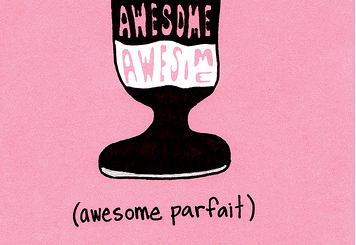
Finally, check out this Awesome Parfait by Carolyn Sewell! It’s pretty awesome. LINK »
See More Posts About:
- A link to this post:
- Tweet
- StumbleUpon
Infographics AND tacos? Where do I sign up!?

I’m just gonna quote the post:
Last fall a group of CCA architecture students, led by Landscape Architect David Fletcher and Rebar art and design studio shared a meal together at a local taco truck for a class assignment. Our research seminar explored San Francisco’s food and wastesheds. Our premise was that a seemingly simple, familiar food like the taco truck taco could provide visceral insight into the connections between the systems we were exploring.
Turns out it was pretty tough. Big twist, right? Anyway, there was a talk that we already missed, but the chart is still sweet, even at the small size it’s shown. If anyone finds more about the talk let me know. LINK.
See More Posts About:
- A link to this post:
- Tweet
- StumbleUpon
How Curling Works

In case Monday’s comic on curling whet your tastebuds for curling (check out the comments), here’s a great infographic from GOOD about how curling works. I’m not seeing any “curl”. LINK.
See More Posts About:
- A link to this post:
- Tweet
- StumbleUpon
The System 340: Why We Need Charts

My brother says this is begging for the Heisenberg Uncertainty Principle, but that would ignore all my friends in the world of social sciences. Instead, the Observer Effect works just fine, which gets at the root of the issue.
UPDATE: Systemic MikeASchneider has alerted me to the similarities between this comic and one done by XKCD. No piracy was intended, and I maintain that this one is prettier and better kerned. While I’m a fan of XKCD, I can’t say I’ve read every one. Great minds think alike, I suppose? For those wondering where all the graphic design jokes have gone, stay tuned. They aren’t far off.
See More Posts About:
- Image Link Code:
- A link to this post:
- Tweet
- StumbleUpon
Comments: